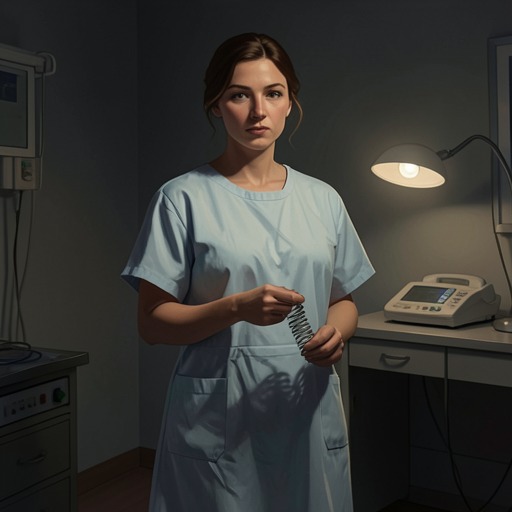
Reiko leaves the sanatorium and travels to Tokyo
Norwegian WoodReiko leaves the sanatorium and travels to Tokyo at a moment when grief has divided the living from the dead. After Naoko’s death, Reiko’s arrival gives her and Toru Watanabe a chance to speak face to face, but it is no simple return to ordinary life: she has spent eight years in the sanatorium, has lost the companion who made it a home, and is frightened by the freedom she is choosing. Their meeting joins a farewell to the institution with a tentative movement toward what comes next.
The decision to leave
On the fourth day after Watanabe returns to Tokyo, a special-delivery letter from Reiko asks him to call her. She has been unable to reach him for weeks and says she will be waiting by the telephone at nine in the morning and nine at night. Their call leads to the news that she intends to leave the sanatorium and visit him. Her reason is immediate and personal: coming to Tokyo is the way she can see Watanabe, and she believes it is time to leave after eight years there. She jokes that if the institution keeps her longer, she will start to rot, but beneath the joke is the scale of the transition. The place has been her home for years; departure is not merely a change of address but a step out of the life and routines that have held her.
The journey is arranged with precision. Reiko tells Watanabe she will arrive on the 3:20 bullet train two days later and asks him to meet her at Tokyo Station. Her question about whether he still remembers what she looks like, or has lost interest now that Naoko is dead, brings the new absence directly into the practical arrangements. Watanabe answers that he will be there. The appointment makes their reunion possible, but its terms are shaped by Naoko’s death: Reiko is coming because she cannot remain at the sanatorium without her, and because she wants to speak with Watanabe, who also knew and lost her.
A recognizable arrival
At Tokyo Station, Watanabe finds Reiko easily in the crowd. Her appearance is distinctive and specific: a man’s tweed jacket, white trousers, red trainers, very short hair with its familiar tufts, a brown leather suitcase in one hand and a black guitar case in the other. She greets him with a broad, wrinkled smile; he grins back, takes her suitcase, and walks beside her toward a train for the western suburbs. These details give the departure a material shape. Reiko has left the sanatorium carrying both the necessities of travel and her guitar, while Watanabe meets her not as an abstract figure from Naoko’s letters but as a familiar person returned to his presence.
Their first exchange also registers what has happened to Watanabe during his absence. Reiko teases him about the terrible look on his face, and he explains that he has been travelling and eating badly. The joke makes room for recognition without pretending that he has recovered. His journey and her arrival meet at the station, but they have not made his grief disappear. Their reunion offers company and conversation, not a cure.
Fear after the refuge
The emotional difficulty of leaving emerges plainly in Reiko’s confession that she is scared—so scared she feels she could go crazy—and does not know what she is supposed to do, flung out by herself. The fear is not resolved simply because she has made the journey. Watanabe takes her hand and tells her that her own strength has brought her this far. His gesture and reassurance acknowledge both her vulnerability and the effort already involved in reaching this threshold.
Reiko explains that she had to come to Tokyo because she could not bear to remain at the sanatorium without Naoko; if nothing had happened, she might have spent the rest of her life there. This retrospectively clarifies the departure’s cause. The sanatorium had offered a quiet, nature-filled community organized around convalescence and mutual accommodation, but its boundaries mattered: when Naoko’s condition worsened, Reiko and the others concluded that she needed intensive treatment in a specialized hospital. Reiko’s life there had also blurred the categories of patient and staff. She had lived there seven years when she introduced herself as a music teacher who helped in the office, and explained that the residents entered and left voluntarily. By the time she leaves, she says she has been there eight years. The institution was neither an ordinary hospital nor a permanent answer; it provided a particular form of shared life, and Reiko now has to find her way beyond it.
A destination beyond Tokyo
When Watanabe asks what she plans to do, Reiko says she is going to Asahikawa, far north in Hokkaido. An old college friend who runs a music school has been asking her for two or three years to help there. Reiko admits she had resisted because she thought it would be too cold; now that she has her freedom back, the prospect still does not excite her, and she calls the town a hole in the ground. Her hesitation keeps the future uncertain: leaving the sanatorium has not instantly turned into confidence or enthusiasm.
Watanabe answers that he has been to Asahikawa and that it is not a bad little town, with an atmosphere of its own. Reiko asks if he is sure. The exchange is modest, but its direction matters. She has come to Tokyo to see Watanabe, not to settle there; her next stated plan takes her toward work at a music school and a friend who has been waiting for her. The scene therefore closes not with a grand resolution but with a destination, a practical possibility, and the continuing fear of beginning again.
Grief, memory, and renewed movement
Reiko’s journey crosses the aftermath of Watanabe’s own attempt to comprehend Naoko’s death. During his travels along the coast, he had struggled to believe that she was gone, carrying vivid memories of her as if she were still beside him. At times, memory created a place where Naoko lived with death inside her; when that inward refuge receded, he was left alone with sadness. He concludes that no truth, sincerity, strength, or kindness can cure the sorrow of losing someone loved: grief must be lived through, and what is learned from one loss cannot protect anyone from the next.
That understanding gives Reiko’s arrival its particular weight. She too has lost Naoko, and she says directly that the loss made it impossible for her to stay where they had lived together. Watanabe, meanwhile, has returned to Tokyo and shut himself away, his memory fixed on the dead rather than the living. Reiko’s letter and visit interrupt that isolation without erasing it. The movement is small but consequential: a call is answered, a train is met, a hand is taken, and a future route is named. In a novel where death remains woven into the lives of those who survive, this departure and reunion do not solve grief; they create a fragile occasion for the living to move again.